
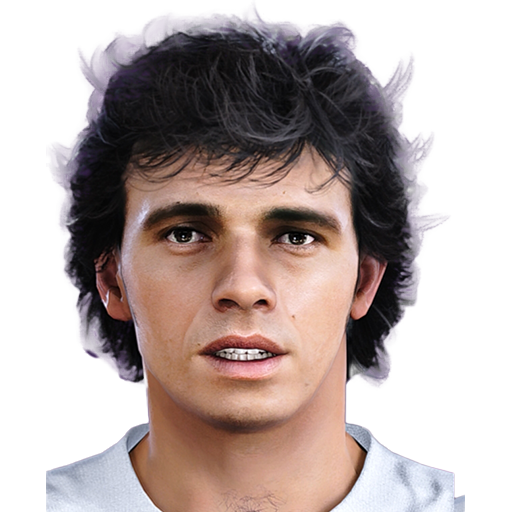
Physical Skills
Technical Skills

Tactical Skills

Mental Skills

Attacking Skills

Defensive Skills

Legacy

Identity

Pref. Moves
– Brings ball out of defense
– Dives into tackles
– Injury Free
– Mark his opponents tightly

Stats
Club
Apps: 791
Goals: 40
Goal Ratio: 0,05
Career Span (yrs): 18
National Team
Apps: 47
Goals: 3
Goal Ratio: 0,06
Career Span (yrs): 16
Elías Figueroa is one of those defenders whose reputation grows the more you study him. In South America he’s often considered the greatest centre-back the continent has ever produced, and if you look at pure completeness- technique, intelligence, athleticism, leadership – he stands comfortably on the same tier as Franco Baresi or Bobby Moore. The only reason his name isn’t global is geography. He spent his entire career in South America, and he played for a Chilean national team that, while proud, was never influential on the world stage. Outside the continent, only journalists, historians and true obsessives fully grasp how extraordinary he was.
On the field he looked astonishingly modern. Figueroa was powerful without being rigid, fast without being reckless, and elegant without sacrificing physical presence. He marked strikers tightly, won duels cleanly, and had a reading of the game that felt almost telepathic. His anticipation was absurdly good: he’d step forward half a second before the pass was played, cut the line, and start the transition with total serenity. His timing in the air made him nearly unbeatable: he rose early, positioned perfectly, and rarely lost a header.
Technically, he was far above the standards of his era. Comfortable on the ball, calm under pressure, crisp in short distribution, and fully capable of breaking lines with purposeful passes. He didn’t just protect the defence; he organised it. That leadership was part of his identity. Teammates described him as a calm authority, someone who controlled the back line with presence rather than volume. Everywhere he went, Chile, Brazil, Uruguay, he became the reference point almost instantly.
And unlike many defenders of that generation, he had a decisive impact on the scoresheet. Figueroa scored important, high-value goals: headers in finals, long-range attempts, set-piece finishes. He collected awards traditionally reserved for attackers, player of the year titles, best-in-league accolades, because his influence on matches was that overwhelming. His spell at Internacional is still remembered as the era of a “defender who played like a captain of the universe,” a phrase often repeated in Brazil.
His World Cup legacy is small but telling. In 1974, he faced Gerd Müller, one of the most lethal strikers in history, and effectively neutralised him. It wasn’t luck. It was positioning, anticipation, and that uncanny ability to read actions before they fully formed. Chile didn’t advance, but people who watched those matches never forgot what Figueroa did to Müller.
Elías Figueroa is one of those players whose legend depends not on marketing or trophies, but on pure quality. A centre-back who could dominate physically, intellectually and technically; a defender so complete that, in another context, playing in Europe, wearing a more competitive shirt, he’d be universally mentioned among the greatest of all time.