
Legends Database

Carlos Alberto TORRES

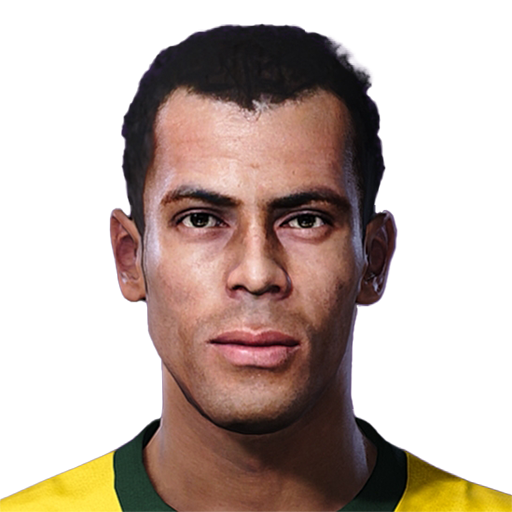
AI-generated photorealistic reconstruction – Non-official

CARLOS ALBERTO

Right Back

Overall RATING
0
0%
Attacking Skills
0%
Playmaking
0%
Defending Skills

Primary Role

Fullback – Support++

180cm x 77kg; Right Footed; Prime 1967 – 1972
Physical Skills

0
Acceleration
78%
Agility
76%
Balance
83%
Jump
80%
Natural Fitness
84%
Speed
85%
Stamina
86%
Strength
83%

Technical Skills

0
Ball Control
81%
Crossing
83%
Dribbling
82%
Free Kicks
78%
Heading
82%
Long Passing
83%
Penalties
84%
Shooting Accuracy
76%
Shooting Power
88%
Shooting Technique
74%
Short Passing
78%

Tactical Skills

0
Defensive Positioning
75%
Off the ball
78%
Teamwork
93%

Versatility
77%

Mental Skills

0
Anticipation
78%
Concentration
85%
Consistency
87%
Creativity
77%
Determination
86%
Leadership
87%
Vision
76%

Attacking Skills

Finishing
72%

Defensive Skills

0
Marking
78%
Sliding
76%
Tackling
83%

Legacy

Iconicity
87%
Important Matches
92%
Longevity
84%
Professionalism
87%
Reputation - Domestic
91%
Reputation - Continental
89%
Reputation - World
86%

Identity

Pref. Moves

– Runs with ball down right
– Shoots with power
– Uses outside of foot

Stats

Club

Apps: 765
Goals: 64
Goal Ratio: 0,08
Career Span (yrs): 19

National Team

Apps: 53
Goals: 8
Goal Ratio: 0,15
Career Span (yrs): 13

Carlos Alberto Torres was one of the finest full-backs the game has ever seen, a pillar of the Brazilian tradition of attacking defenders and a natural leader whose presence elevated every team he played for. Known as O Capitão do Tri, he wore the captain’s armband for Brazil’s 1970 World Cup-winning side, arguably the greatest national team ever assembled. The nickname alone tells you what he represented: authority, composure and an unshakeable sense of command.

He was, above all, a complete right-back. Powerful, fast, intelligent in his movement and technically excellent, Carlos Alberto embodied the modern full-back long before football realised what that role could become. He defended with discipline, reading danger early and using his strength to win duels cleanly, but it was with the ball that he truly set himself apart. His touch was refined, his passing precise, his ability to combine in tight spaces natural. He could start plays, break lines, and step into midfield with the assurance of a seasoned playmaker.

His long stride made him a natural attacker. Carlos Alberto progressed with purpose, not with decorative flourishes but with clarity and conviction. He carried the ball in a straight, powerful line, forcing opponents to retreat and opening channels for Brazil’s creative players. And when he arrived near the box, he had a violent, accurate shot, a weapon that culminated in one of the most iconic goals in World Cup history: the thunderous finish against Italy in the 1970 final, after a team move that remains the sport’s masterpiece.

Charisma radiated from him. He captained with an effortless authority, combining calm leadership with a competitive edge that kept teammates sharp. He wasn’t theatrical, but he was unmistakably in charge. His voice mattered, and his presence alone could rebalance a match.

At club level he became a symbol of both Fluminense and Santos, two of Brazil’s most storied teams. At Santos he played alongside Pelé, forming part of a squad that turned domestic football into a stage for technical brilliance. At Fluminense he became an icon, a reference point for a generation.

In the lineage of Brazilian full-backs, a lineage that includes Djalma Santos, Júnior, Cafu, Roberto Carlos and more, Carlos Alberto sits at the summit. Not just because he could do everything, but because he understood everything. He blended physicality, technique, defensive intelligence and leadership into a single, authoritative package.

Carlos Alberto's Skills