Physical Skills
Technical Skills

Tactical Skills

Mental Skills

Attacking Skills
Defensive Skills

Legacy

Identity

Pref. Moves
– Dictates tempo
– Likes to beat man repeatedly
– Tries killer balls often
– Uses outside of foot

Stats
Club
Apps: 505
Goals: 113
Goal Ratio: 0,22
Career Span (yrs): 18
National Team
Apps: 53
Goals: 14
Goal Ratio: 0,26
Career Span (yrs): 13
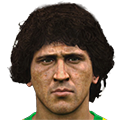
Robert Prosinečki was one of the purest technical talents to emerge from the Yugoslav football school. Born in West Germany to a Yugoslav family and raised football-wise in Croatia, he developed very early into a player of rare natural ability. By the age of 19, at Red Star Belgrade, he was already the central brain of the team, dictating tempo and direction with a level of authority far beyond his years.
Prosinečki was a complete, all-field playmaker. His technique was extraordinary: close control, balance, elegance and an almost effortless ability to glide past opponents. He could beat his man with ease, not through tricks but through timing, body feints and intelligence. He was quick, sharp in his movements, possessed a powerful and accurate shot from distance, and was an excellent penalty taker. Tactically, he was highly intelligent, constantly adjusting his position to receive the ball and influence play.
At Red Star, he functioned as the true organiser of the midfield, orchestrating build-up play while also carrying the ball forward himself. He was not a static regista, but a roaming one, moving across the pitch to connect lines, attract pressure and open spaces. Unsurprisingly, his performances attracted the attention of virtually every major European club.
His transfer to Real Madrid, however, marked a turning point rather than a natural ascent. A series of injuries severely disrupted his development, preventing him from ever reaching the physical and athletic peak his talent deserved. Combined with difficulties in adapting to a new environment and different tactical expectations, his Madrid spell never fully reflected his true level.
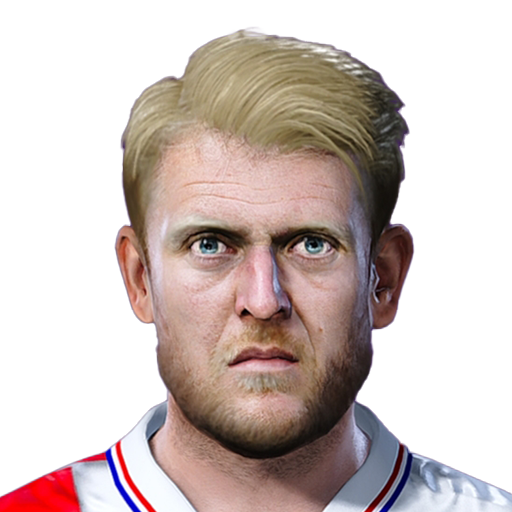
Rather than disappearing, Prosinečki reinvented himself. Between the ages of 28 and 30, at Dinamo Zagreb, he experienced a second footballing youth. No longer as explosive or dynamic as in his early years, he became a more collective and generous player. He dribbled less, carried the ball less over long distances, but compensated with superior vision, composure and passing. In this phase, he evolved into a refined assist man, playing for the team rather than himself.
On the international stage, he left a clear mark. With Croatia, he was a key figure in the historic third-place finish at the 1998 World Cup, scoring twice in the tournament and contributing experience, calm and quality to a young national side making its global debut.