
Legends Database

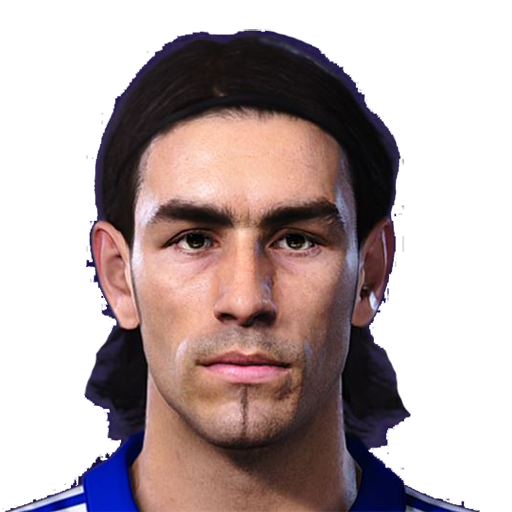
AI-generated photorealistic reconstruction – Non-official

Robert PIRÈS

Left-sided Midfielder

Overall RATING
0
0%
Attacking Skills
0%
Playmaking
0%
Defending Skills

Primary Role

Inside Forward – Balanced +; Classic 10 – Versatile+

187cm x 77kg; Right Footed; Prime 2001 – 2005
Physical Skills

0
Acceleration
81%
Agility
82%
Balance
79%
Jump
75%
Natural Fitness
79%
Speed
82%
Stamina
82%
Strength
80%

Technical Skills

0
Ball Control
90%
Crossing
85%
Dribbling
88%
Free Kicks
84%
Heading
74%
Long Passing
84%
Penalties
77%
Shooting Accuracy
83%
Shooting Power
86%
Shooting Technique
82%
Short Passing
88%

Tactical Skills

0
Defensive Positioning
48%
Off the ball
83%
Teamwork
85%
Versatility
84%

Mental Skills

0
Anticipation
79%
Concentration
87%
Consistency
77%
Creativity
87%
Determination
76%
Leadership
72%
Vision
89%

Attacking Skills

Finishing
82%

Defensive Skills

0
Marking
52%
Sliding
46%
Tackling
58%

Legacy

Iconicity
86%
Important Matches
85%
Longevity
86%
Professionalism
80%
Reputation - Domestic
86%
Reputation - Continental
84%
Reputation - World
83%

Identity

Pref. Moves

– Moves into channels
– Tries killer balls often
– Uses outside of foot

Stats

Club

Apps: 720
Goals: 165
Goal Ratio: 0,22
Career Span (yrs): 22

National Team

Apps: 79
Goals: 14
Goal Ratio: 0,17
Career Span (yrs): 7

Robert Pirès was a refined attacking midfielder, a player whose game was built on elegance, intelligence and a deep understanding of space. At his peak he was one of the most aesthetically pleasing footballers in Europe, capable of making complex attacking patterns look effortless. His finest years came at Arsenal, where he became a fan favourite and a central piece of Arsène Wenger’s tactical vision.

Although often deployed nominally as a left midfielder or left winger, Pirès was never a traditional wide player. Unlike Freddie Ljungberg, who attacked space vertically and relentlessly, Pirès played between the lines. He drifted inside, combined quickly with teammates, and acted as a creative connector rather than a pure runner. His starting position was wide, but his football lived in the half-spaces, where he could dictate tempo, link play and destabilise defensive structures.

Pirès was, in essence, a universal trequartista. He could cross accurately, deliver the final pass with precision, cut diagonally across the pitch to overload central areas, and arrive late into the box to finish moves himself. His off-the-ball intelligence was outstanding, allowing him to appear in dangerous zones without ever forcing the action. Everything he did felt timed rather than rushed.

Technically, he was superb. His ball control was soft and secure, his touch clean, and his movement with the ball graceful rather than explosive. Pirès didn’t rely on pace or physicality; instead, he manipulated defenders through positioning, angles and awareness. He played football with his head up, constantly scanning, always one step ahead of the game’s rhythm.

At Arsenal, he formed devastating partnerships with Thierry Henry and Dennis Bergkamp, fitting seamlessly into a fluid attacking system built on combinations and positional rotations. His influence was subtle but decisive, and his consistency made him a guaranteed starter throughout the club’s most successful period.

With the French national team, Pirès was equally important. He was a key starter in the side that won the World Cup in 1998 and the European Championship in 2000, providing balance, creativity and intelligence in a team rich with talent. He may not have been the loudest presence, but his contribution was structural and essential.

Pirés Skills