

Legends Database

Oliver BIERHOFF

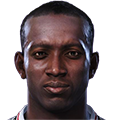
AI-generated photorealistic reconstruction – Non-official

Oliver BIERHOFF

Striker

Overall RATING
0
0%
Attacking Skills
0%
Playmaking
0%
Defending Skills

Primary Role:

Target Forward – Attack++

190cm x 90kg; Right Footed; Prime 1995 – 1999

Physical Skills

0
Acceleration
75%
Agility
68%
Balance
82%
Jump
88%
Natural Fitness
78%
Speed
74%
Stamina
77%
Strength
90%

Technical Skills

0
Ball Control
76%
Crossing
66%
Dribbling
73%
Free Kicks
62%
Heading
99%
Long Passing
63%
Penalties
74%
Shooting Accuracy
84%
Shooting Power
85%
Shooting Technique
83%
Short Passing
73%

Tactical Skills

0
Defensive Positioning
38%
Off the ball
90%
Teamwork
72%
Versatility
52%

Mental Skills

0
Anticipation
90%
Concentration
85%
Consistency
80%
Creativity
60%
Determination
82%
Leadership
77%
Vision
70%

Attacking Skills

Finishing
88%

Defensive Skills

0
Marking
47%
Sliding
43%
Tackling
34%

Legacy

Iconicity
77%
Important Matches
82%
Longevity
78%
Professionalism
86%
Reputation - Domestic
85%
Reputation - Continental
78%
Reputation - World
73%

Identity

Pref. Moves

– Penalty box Player 

Stats

Club

Apps: 516
Goals: 212
Goal Ratio: 0,41
Career Span (yrs): 18

National Team

Apps: 70
Goals: 37
Goal Ratio: 0,52
Career Span (yrs): 6

Oliver Bierhoff was a German centre-forward who reached his peak in Serie A during the second half of the 1990s, particularly with Udinese and later Milan. He was not a genius of the game, nor a complete striker in the modern sense, but he was an extremely effective and specialised attacking weapon, and in one specific aspect of the game, he stood among the very best in football history.

Physically, Bierhoff was the prototype of the target striker. Tall, strong, aggressive and powerful, he played with his back to goal, occupied centre-backs relentlessly and turned the penalty area into his natural habitat. His movement inside the box was intelligent and purposeful: he didn’t drift aimlessly, but attacked zones, anticipated crosses and positioned himself where aerial duels could be turned into goals.

Technically, he was limited with the ball at his feet. He was not a refined dribbler, nor particularly elegant in combination play. However, he compensated with functional intelligence. His hold-up play was solid, allowing teammates to advance, and his positioning was excellent. He understood his role perfectly and never tried to be something he wasn’t.

Where Bierhoff became truly exceptional was in the air. He is widely regarded as one of the greatest headers of the ball in football history , and by some, quite simply the best. His heading ability was not only about height and strength, but about timing, elevation, neck power and precision. Bierhoff could generate astonishing force with his head, often striking the ball with a power comparable to a clean shot with the foot. Crosses, set-pieces, second balls: everything in the air became dangerous in his presence.

He didn’t just score headers; he used his head as a tool. Bierhoff frequently provided assists through knock-downs, flick-ons and aerial layoffs, effectively acting as a reference point for the entire attacking structure. In this sense, he was not just a finisher but a functional pivot in advanced areas.

Although scoring with his feet was not his primary strength, he did possess a powerful shot and could finish when given time and space. Still, his game revolved around dominance in the air and ruthless efficiency in the box rather than technical variety.

At international level, his impact was remarkable. Over a six-year span with the German national team, Bierhoff maintained an excellent scoring rate, netting 37 goals in 70 appearances — a very high average, especially considering the tactical demands placed on strikers at international level. He was decisive, reliable and built for tournament football.

Bierhoff's Skills