
Legends Database

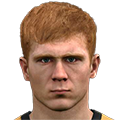
AI-generated photorealistic reconstruction – Non-official

Nobby STILES

Defensive Midfielder

Overall RATING
0
0%
Attacking Skills
0%
Playmaking
0%
Defending Skills

Primary Role:

 Holding – Ball-Winning ++

168cm x 68kg; Right Footed; Prime 1964 – 1968

Physical Skills

0
Acceleration
82%
Agility
84%
Balance
85%
Jump
83%
Natural Fitness
88%
Speed
80%
Stamina
92%
Strength
75%

Technical Skills

0
Ball Control
77%
Crossing
67%
Dribbling
77%
Free Kicks
68%
Heading
75%
Long Passing
76%
Penalties
52%
Shooting Accuracy
68%
Shooting Power
79%
Shooting Technique
66%
Short Passing
80%

Tactical Skills

0
Defensive Positioning
83%
Off the ball
64%
Teamwork
87%
Versatility
70%

Mental Skills

0
Anticipation
87%
Concentration
85%
Consistency
91%
Creativity
51%
Determination
95%
Leadership
82%
Vision
73%

Attacking Skills

Finishing
52%

Defensive Skills

0
Marking
87%
Sliding
84%
Tackling
81%

Legacy

Iconicity
60%
Important Matches
89%
Longevity
83%
Professionalism
88%
Reputation - Domestic
88%
Reputation - Continental
83%
Reputation - World
75%

Identity

Pref. Moves

Dives into tackles
Mark his opponents tightly

Stats

Club

Apps: 510
Goals: 22
Goal Ratio: 0,04
Career Span (yrs): 24

National Team

Apps: 28
Goals: 1
Goal Ratio: 0,02
Career Span (yrs): 6

Nobby Stiles was a fundamental defensive midfielder, a player whose importance can only be fully understood by looking at what he allowed others to do. He was a key figure for Manchester United in the 1960s and an essential component of England’s World Cup–winning side in 1966. Not a star in the conventional sense, but a cornerstone , the kind of footballer every great team quietly depends on.

Stiles was a pure holding midfielder, a man-marker by vocation and a ball-winner by instinct. Aggressive, relentless and uncompromising, he played the role with extraordinary tenacity. His engine was remarkable: two lungs, endless running, constant pressure. He harassed opponents, closed spaces, intercepted passes and recovered possession with an intensity that never dropped.

Technically, he was simple and functional. He didn’t dictate play, didn’t look for ambitious passes, and didn’t try to shine. His contribution lay elsewhere. He broke rhythm, disrupted attacks and immediately handed the ball over to more gifted teammates. That selflessness was his defining quality. His willingness to sacrifice himself tactically gave creative players like George Best and Bobby Charlton the freedom to express themselves without defensive burden.

Stiles’ defensive intelligence was often underestimated. He read danger early, positioned himself well, and understood exactly when to engage and when to hold. His marking was tight, physical and mentally exhausting for opponents. In the 1966 World Cup final stages, his role was absolutely central , he neutralised threats, absorbed pressure and brought balance to a team rich in attacking talent.

His influence can be best understood through comparison. Stiles was to Manchester United what Massimo Bonini was to Juventus, what Claude Makélélé was to France and later to Real Madrid and Chelsea. A facilitator. A stabiliser. A tactical sacrifice that turns talent into trophies.

Stiles Skills