
Physical Skills
Technical Skills

Tactical Skills

Mental Skills

Attacking Skills
Defensive Skills

Legacy

Identity

Pref. Moves
– Shots with power
– Curls ball
– Hits free-kick with power
– Cuts inside

Stats
Club
Apps: unknown
Goals: unknown
Goal Ratio: unknown
Career Span (yrs):unknown
National Team
Apps: 51
Goals: 8
Goal Ratio: 0,13
Career Span (yrs): 7
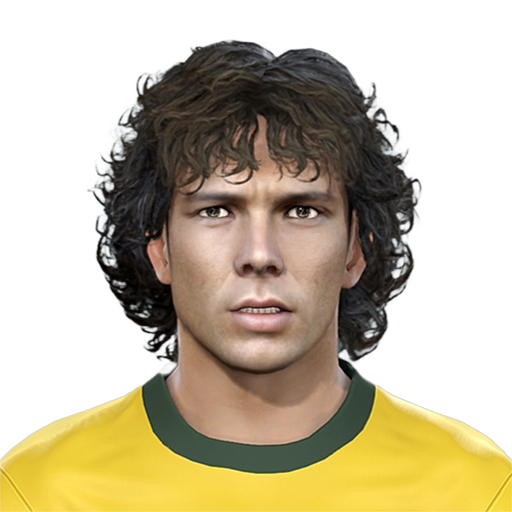
Éder Aleixo was one of the most atypical wingers Brazilian football has ever produced, a player whose game broke many of the traditional expectations associated with the role. His prime came very early, especially during his explosive years at Atlético Mineiro, where his raw striking power and individuality made him a feared presence despite an unconventional skill set.
Forget the classic Brazilian winger who lives on acceleration, endless dribbles and byline crosses. Éder was something else entirely. A pure left-footer, his defining weapon was his shot: devastating, thunderous, and among the most powerful ever seen in football history. He didn’t need much backlift, space or preparation. If he saw a shooting lane, he took it, often with frightening results. His ability to combine sheer power with heavy swerve made his strikes unpredictable and extremely difficult to deal with for goalkeepers.
Set pieces were another major strength. Éder was an elite dead-ball specialist, capable of striking free kicks with extreme velocity and pronounced movement. He could bend the ball aggressively, but just as often he preferred brute force, driving shots through defensive walls rather than around them. Few players could hit a stationary ball with such violence and effect.
From a physical standpoint, he was not particularly fast and not especially powerful in duels. His game was not built on athletic dominance. Technically, he was solid but not refined to the level of Brazil’s great artists. His dribbling was functional rather than dazzling, and he relied more on positioning and decision-making than on beating multiple men.
Tactically, Éder played as a cutting winger. Starting wide on the left, he looked to move diagonally inside to open shooting angles or to deliver early crosses rather than hugging the touchline. He crossed often, shot whenever possible, and constantly looked for situations where his left foot could be decisive. He was direct, vertical and unapologetically individualistic in his attacking choices.
At international level, he delivered strong performances during the 1982 World Cup, fitting into a Brazil side rich in creativity but lacking physical shooting presence. His ability to strike from distance offered a different attacking solution, even if his overall contribution was less continuous than that of his more technically gifted teammates.
Consistency, however, was his major limitation. Éder’s performances fluctuated significantly, and recurring injuries repeatedly interrupted his rhythm and development. These physical setbacks, combined with an inherently streaky nature, prevented him from sustaining elite form over long periods.